

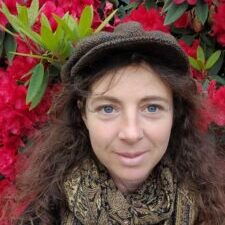
Rebecca Tuttle, LAc
Acupuncturists
After many years as a community acupuncturist, I especially enjoy working with people whose health concerns are complex, persistent, or have not been well served by conventional approaches.
My practice is grounded on the principle that our health is shaped by much more than what happens inside our bodies. Our relationships, environments, resources, histories, and lived experiences all matter. I believe people deserve care that helps them understand their bodies, participate in their own healing, and build lives with more ease and possibility. I don’t believe we should simply have to accept suffering as an inevitable part of life.
My own path to acupuncture began after a disabling health event that disrupted my work and housing, and left conventional healthcare out of reach. Eventually, I found a community acupuncture clinic that offered treatment without turning anyone away for lack of funds. Experiencing acupuncture as a patient changed the direction of my life and inspired me to become an acupuncturist. Since becoming an acupuncturist, I’ve worked in busy community clinics, addiction-recovery settings, multidisciplinary healthcare environments, special-education services, and community outreach.
I genuinely love community acupuncture. After tens of thousands of treatments, I’ve learned how to work efficiently without making care feel rushed or impersonal. Whether someone is completely new to acupuncture, nervous about needles, or has a long and complicated health history, I want them to feel listened to, respected, and at ease.
My clinical experience includes acute and chronic pain, injuries, reproductive and hormonal health, digestive and autoimmune conditions, sleep, mental and emotional health, cancer support, and substance-use recovery. I also have experience working with people of all ages, from infants and children, to older adults and people navigating end-of-life care.
I particularly value working with people whose health concerns are interconnected, complex, or don’t fit neatly into a single diagnosis. This experience has taught me to listen carefully, communicate flexibly, respect individual autonomy, and meet people where they are. I’ve had the privilege of caring for LGBTQIA2S+ and gender-diverse people, BIPOC communities, immigrants and refugees, Veterans, people with disabilities, people in recovery, and people experiencing homelessness or significant barriers to healthcare.
One of the most rewarding parts of this work is watching patients discover that they may have more possibilities for healing than they thought. I feel fortunate to offer a steady, supportive place to land while helping people reconnect with their bodies and find practical ways forward.